Volume 01 · Dispatch April 2026 Ho Chi Minh City
The Directory →
A dispatch from Ho Chi Minh City

A year of mornings
on a plastic stool.

A diaristic field guide to Ho Chi Minh City — how to land, move, eat, drink, work, and live in a city of tiny plastic chairs, motorbike rivers, and coffee strong enough to argue with.

10.8MPopulation, greater HCMC
7.4MRegistered motorbikes
88%Of payments by QR
Chapter 01

You just landed.

Tân Sơn Nhất · Immigration · Taxi

The first ninety minutes in Saigon decide how the rest of your trip feels. Spend a little, skip the line, and do not — under any circumstances — take a scam taxi.

Immigration at Tân Sơn Nhất can take one to three hours on a bad night. Do not gamble with it. Thirty dollars buys fast-track — someone meets you at the gate with a small board bearing your name, walks you through a priority lane, and deposits you at baggage claim ten minutes later. Once you've done it, you'll never arrive without it.

While you're still in your seat on the plane, install Saily. It gives you a data-only eSIM for about four dollars and works the second wheels touch down. No local number, but you don't need one — you need Grab and Google Maps, and Grab is how you'll get out of the airport. If you want a physical SIM, the Viettel counter is on the left as you exit arrivals; their coverage is the best in the country.

The scam taxi problem

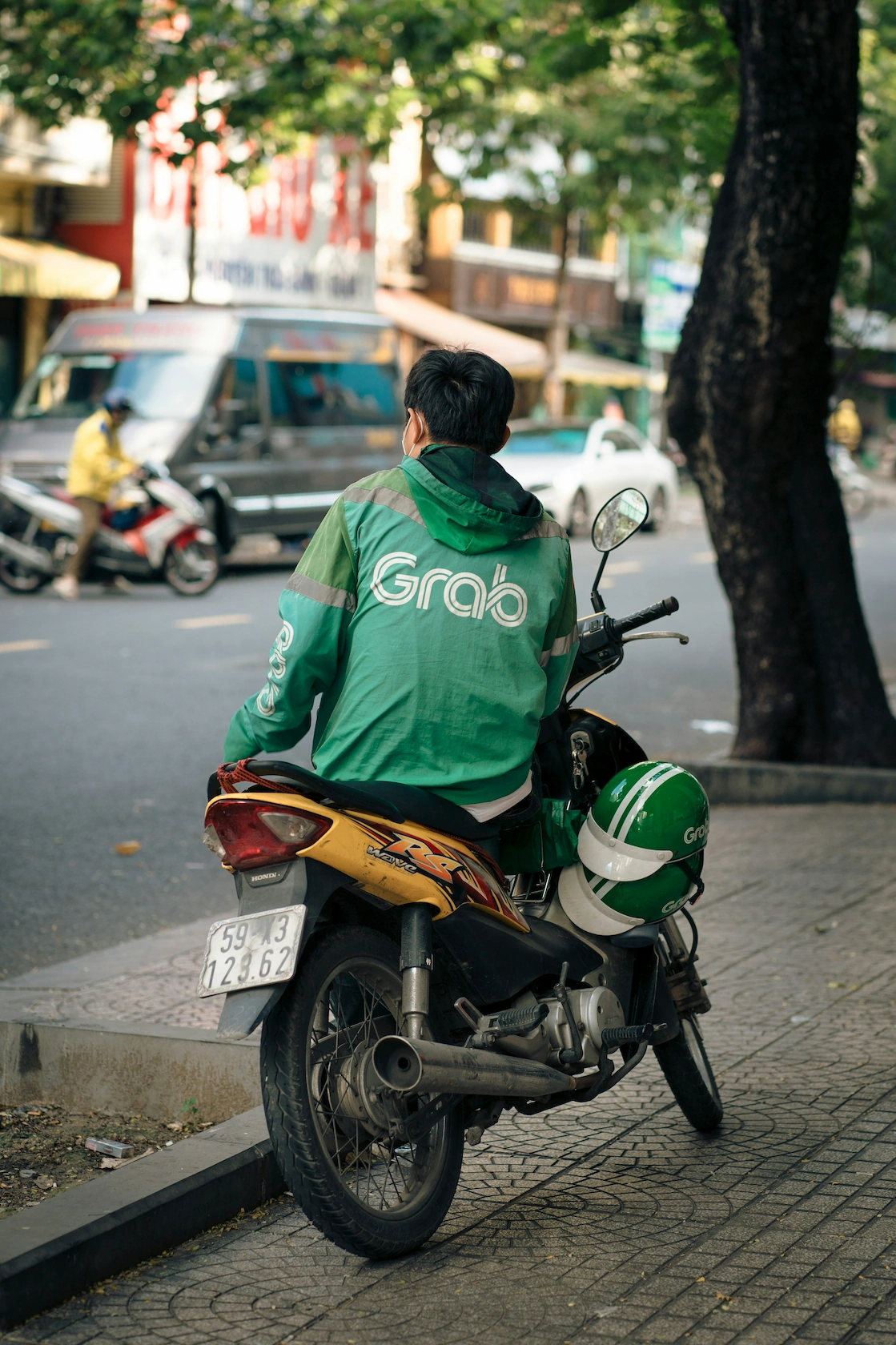
This is where every new arrival gets burned. You walk out of arrivals exhausted, and a small crowd of men in Grab-green shirts flashes laminated IDs at you, offering to "help you book." It isn't Grab. It's three scams in a trenchcoat.

Three things to watch for

Fake Grab drivers. They book the ride on their phone, not yours, and quietly change the pickup point so the fare reads 800,000₫ instead of 150,000₫. You won't notice until the map turns the wrong direction.

The bill swap. You hand over a 500,000₫ note. The driver palms it, returns a 50,000₫ note, insists you underpaid. At night, in a tired hand, the two notes look almost the same.

The clone taxi. "Vimasun" in the exact livery of VinaSun. "Mai Link" in the green of Mai Linh. Same stripes, rigged meter — a 100,000₫ ride becomes 900,000₫.

01

Open Grab yourself.

Book from your own phone. Don't hand it to anyone. Don't let a stranger "help."

02

Walk to the Grab pickup zone.

Past two pedestrian crossings, tucked behind the row of airport restaurants. Poorly signposted on purpose.

03

If you must take a meter — only these two.

VinaSun (white, red/green stripes) or Mai Linh (all green). Nothing else. Ever.

The rule

Open Grab yourself. Book it yourself. The Grab pickup zone is past two pedestrian crossings, tucked behind the row of airport restaurants — poorly signposted on purpose. If a stranger offers to walk you there, walk the other way. If you must take a metered taxi, it's VinaSun (white with red and green stripes) or Mai Linh (all green). Nothing else, ever.

Your first Grab into District 1 will be about 150–200,000₫, or six to eight dollars. You'll pay with a scan.

"Open Grab yourself. Book it yourself. If someone offers to guide you — keep walking." — Rule number one, Tân Sơn Nhất
Chapter 02

The motorbike thing.

Grab · GreenSM · Be · Your first 48 hours

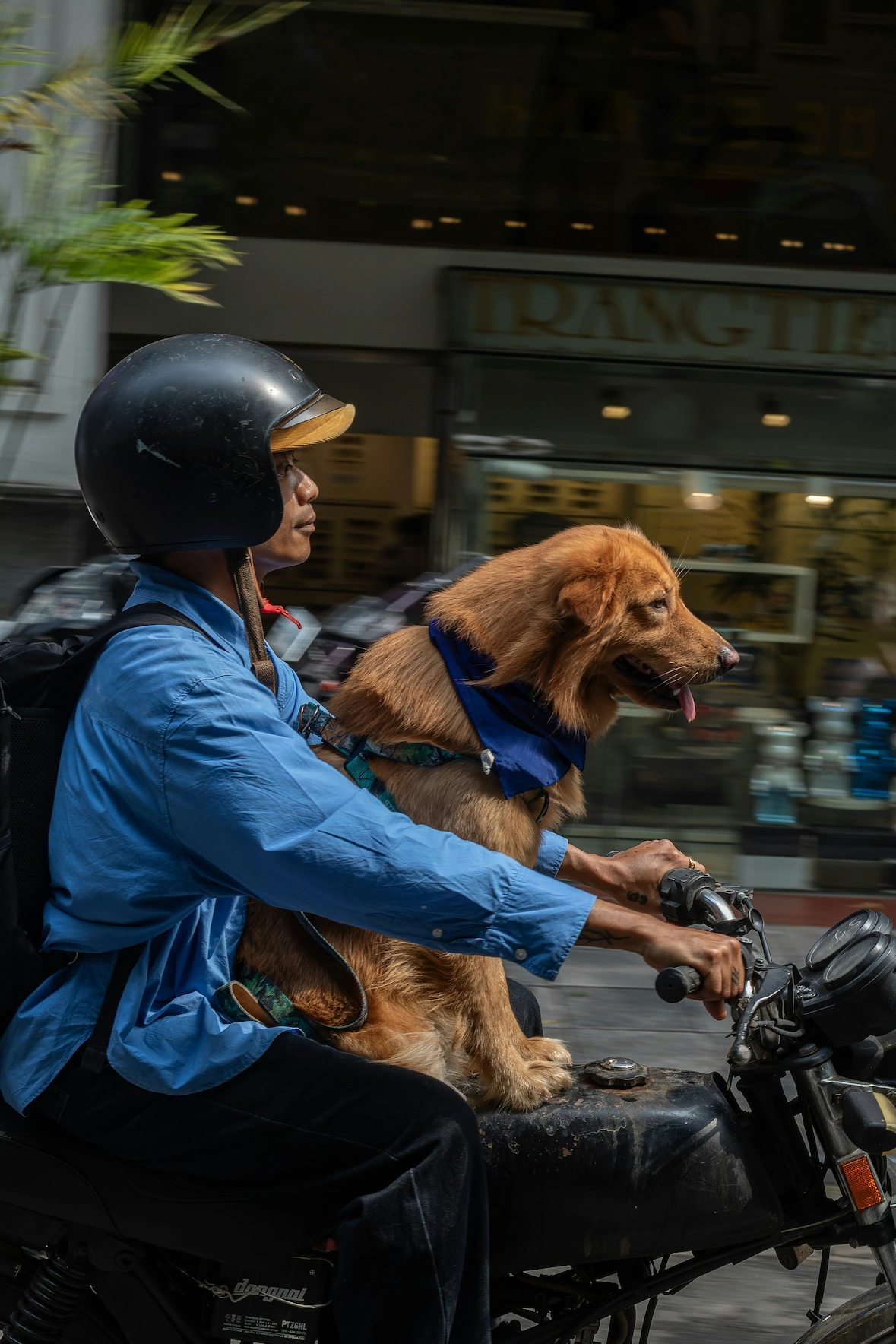
It looks terrifying for about two days. Then it becomes the only way you want to move through the city.

You already have Grab from the airport. It isn't just rides — it's food, groceries, deliveries, laundry, all on the same account. GreenSM (the old Xanh SM, newly rebranded) is the electric alternative and usually a few thousand dong cheaper; their scooters are silent and new. Be is the third player, good to keep on your phone for when the first two surge.

Grab

Cars, bikes, food, groceries, deliveries. The app you live in.

GreenSM

Electric. Usually cheaper. Always quieter.

Be

The underdog. Keep it on your phone for when the first two surge.

Zalo

Not WhatsApp. Zalo is how everyone here texts you.

GrabBike is faster than a GrabCar in traffic and costs almost nothing. Two kilometers is less than a dollar. The motorbike thing does look terrifying for about forty-eight hours. Then, one morning, you'll catch yourself weaving through a dozen other bikes at a green light, the wind in your shirt, and you'll understand why nobody here drives anything else.

Directions, approximately

Google Maps works in Saigon, and the directions are best understood as suggestions. Your driver will call you. Answer the phone. If you don't speak Vietnamese, share your live location in the Grab chat and learn to describe yourself by landmarks. "Next to the Circle K on Xuân Thủy" is a perfectly valid address here. So is "the second alley after the temple." You'll get used to it.

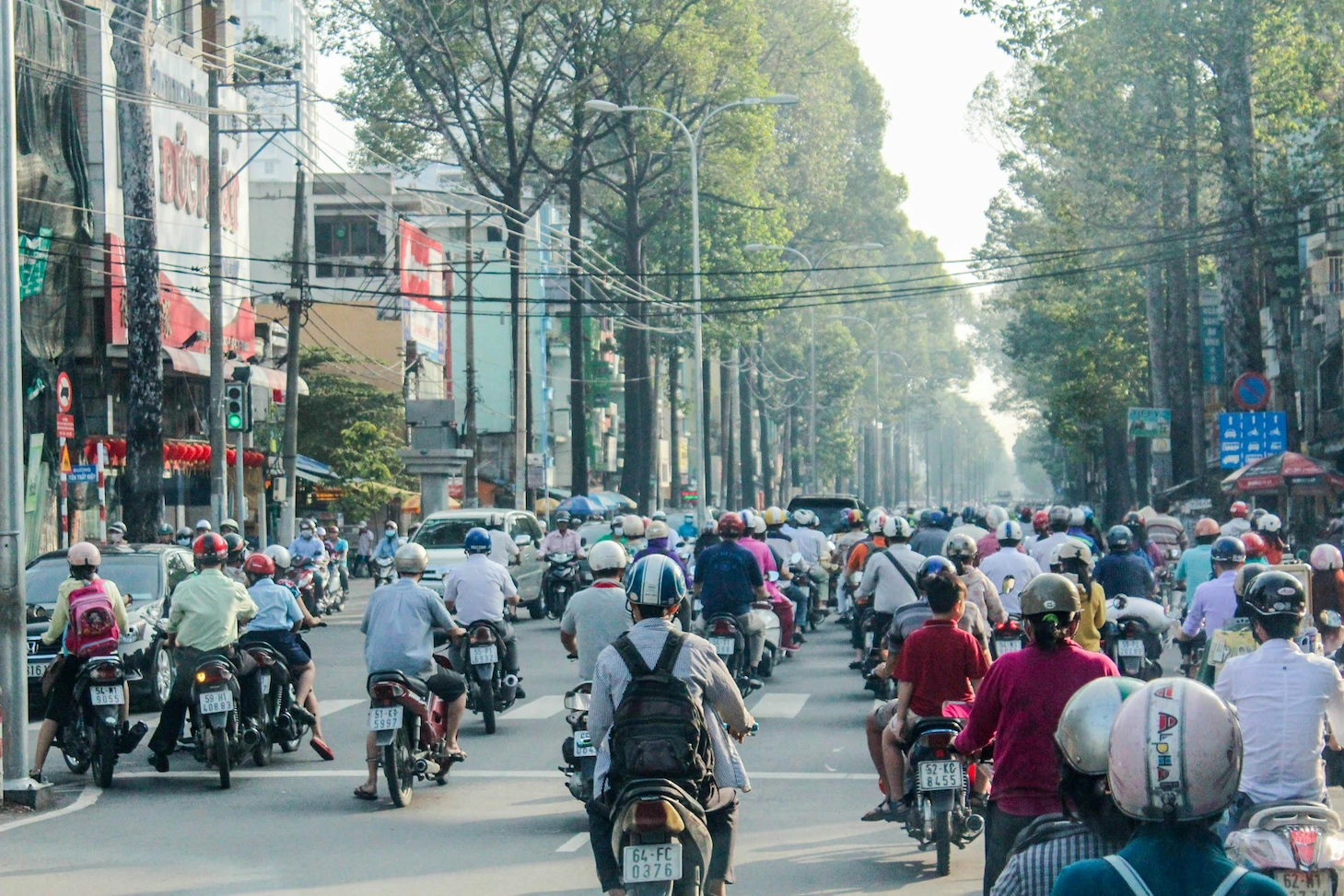
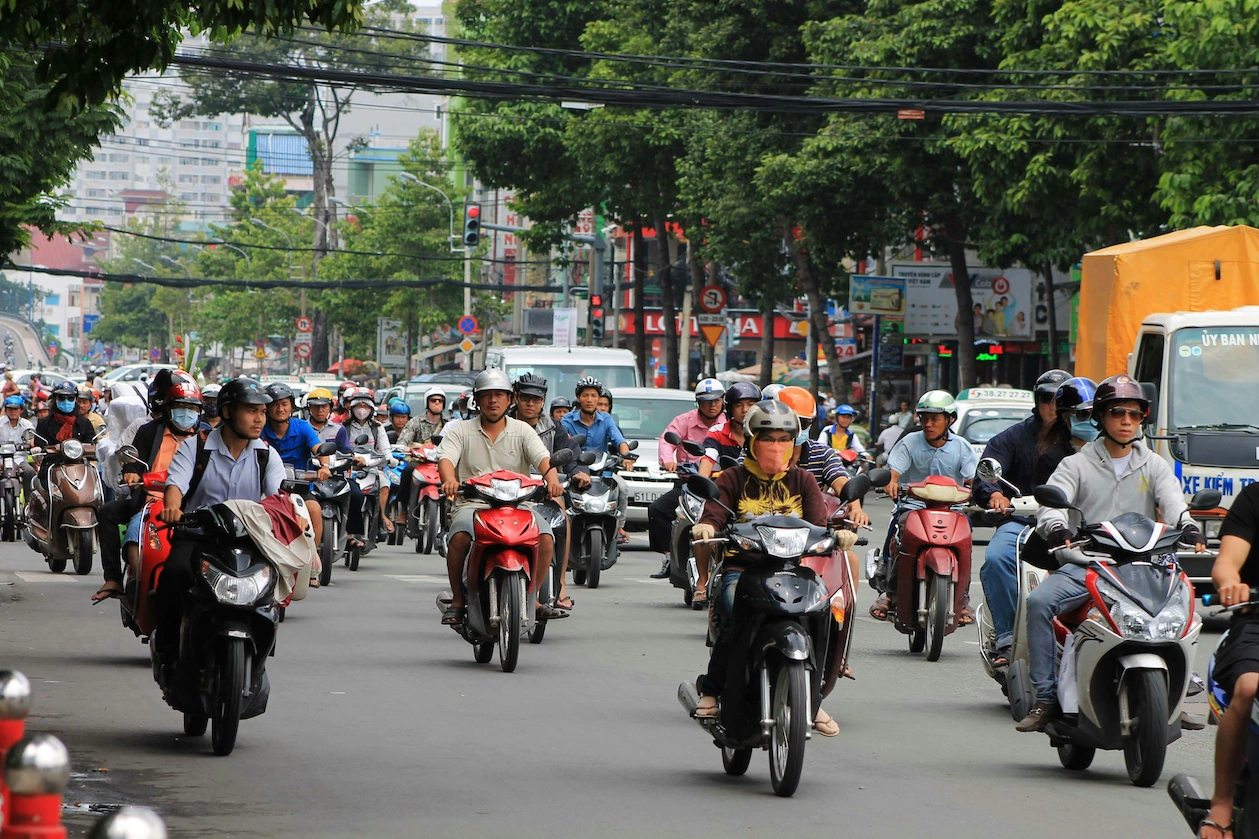
Rush hour motorbike traffic on a tree-lined Saigon boulevard Fig. 02 · Rush hour A main boulevard, 5:47 p.m.
Fig. 02A main boulevard, somewhere in the 4–6 p.m. stretch. Everyone is late. Nobody is hurrying. The motorbike river finds its own level.

Eventually you'll get your own motorbike. Everyone does. You'll tell yourself you won't, and then you'll meet a friend-of-a-friend selling a used Honda Vision for four hundred dollars and that will be that.

Chapter 03

Coffee is infrastructure.

Cà phê sữa đá · Third-wave · Sidewalk stools

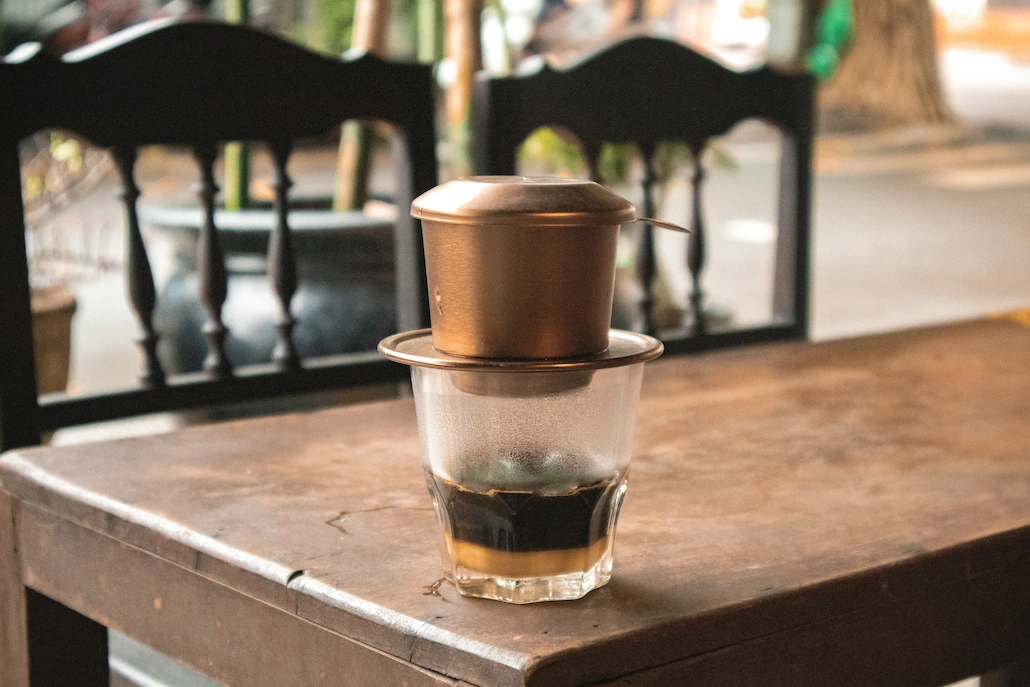
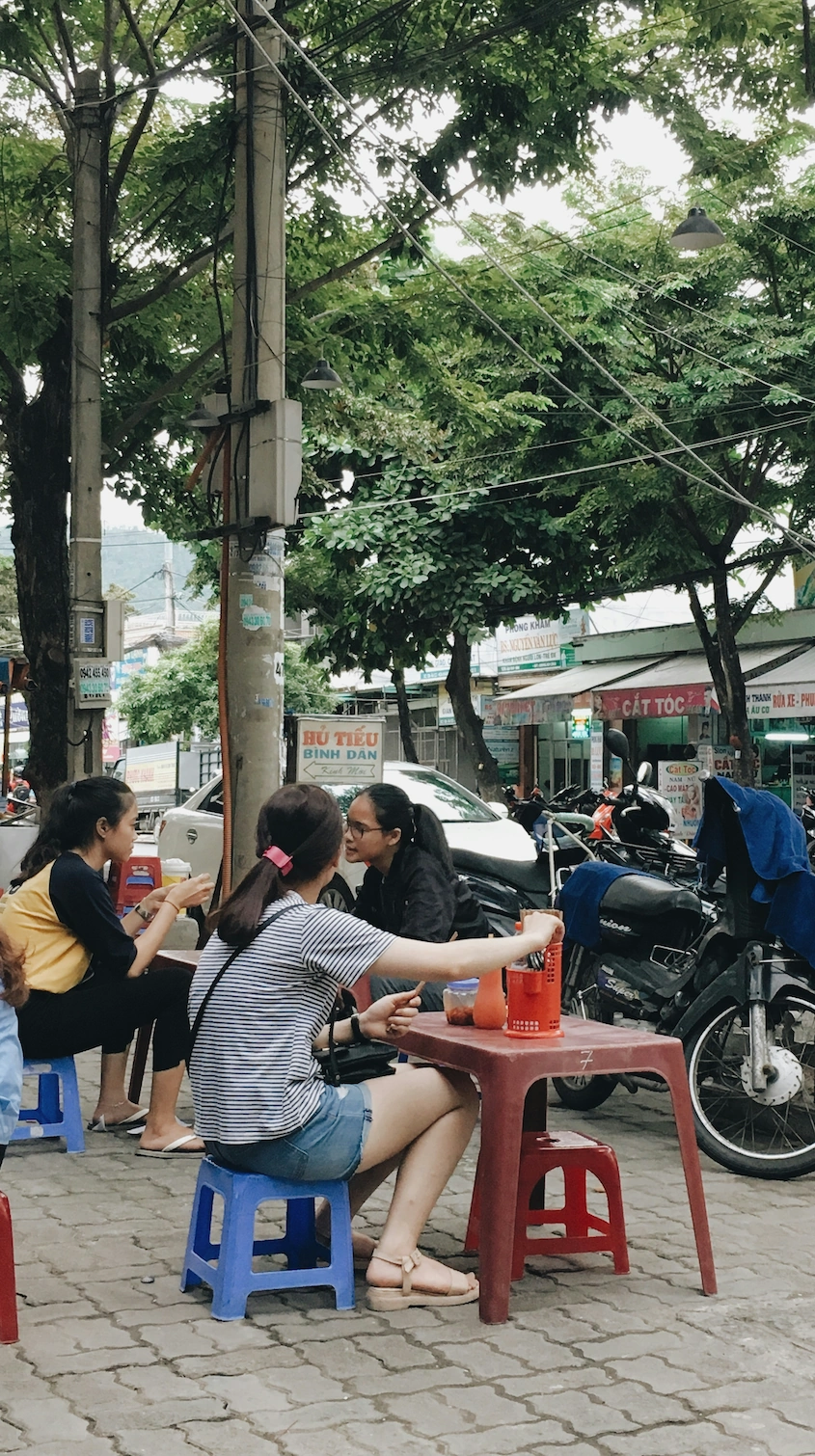
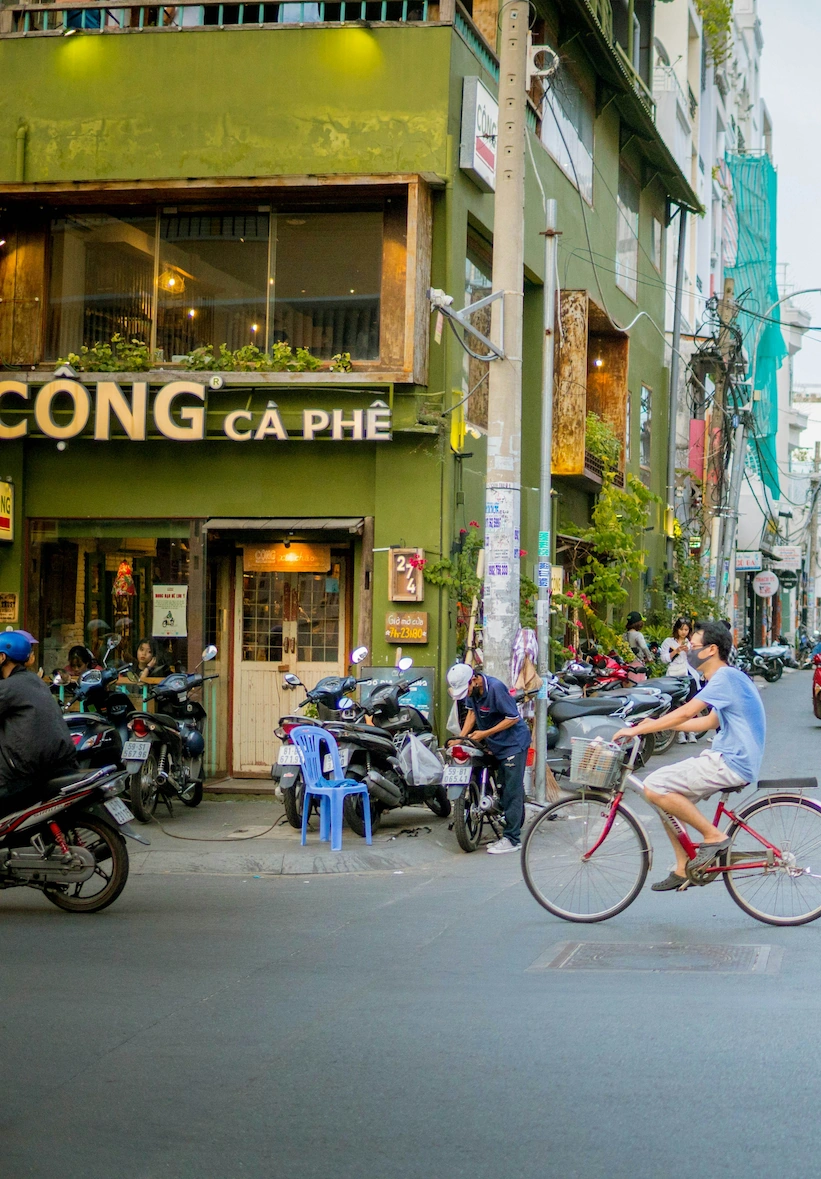
Vietnamese coffee culture makes Italy look casual. People sit on tiny plastic chairs on the sidewalk every morning. It's not a trend. It's been happening for decades.

A cà phê sữa đá from a street stall costs 20–30,000₫. About a dollar. It will be stronger than any espresso you've had, poured over a heap of ice, cut with condensed milk, and served on a red plastic stool the size of a dinner plate.

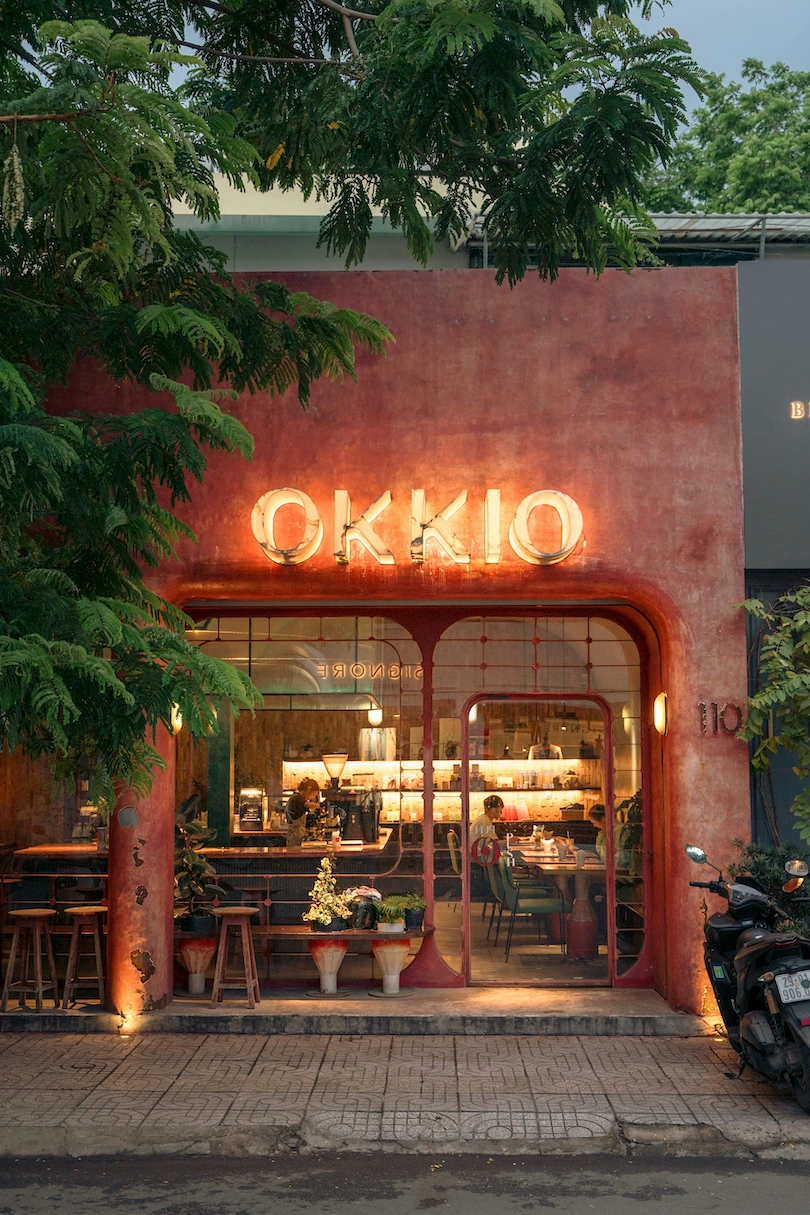
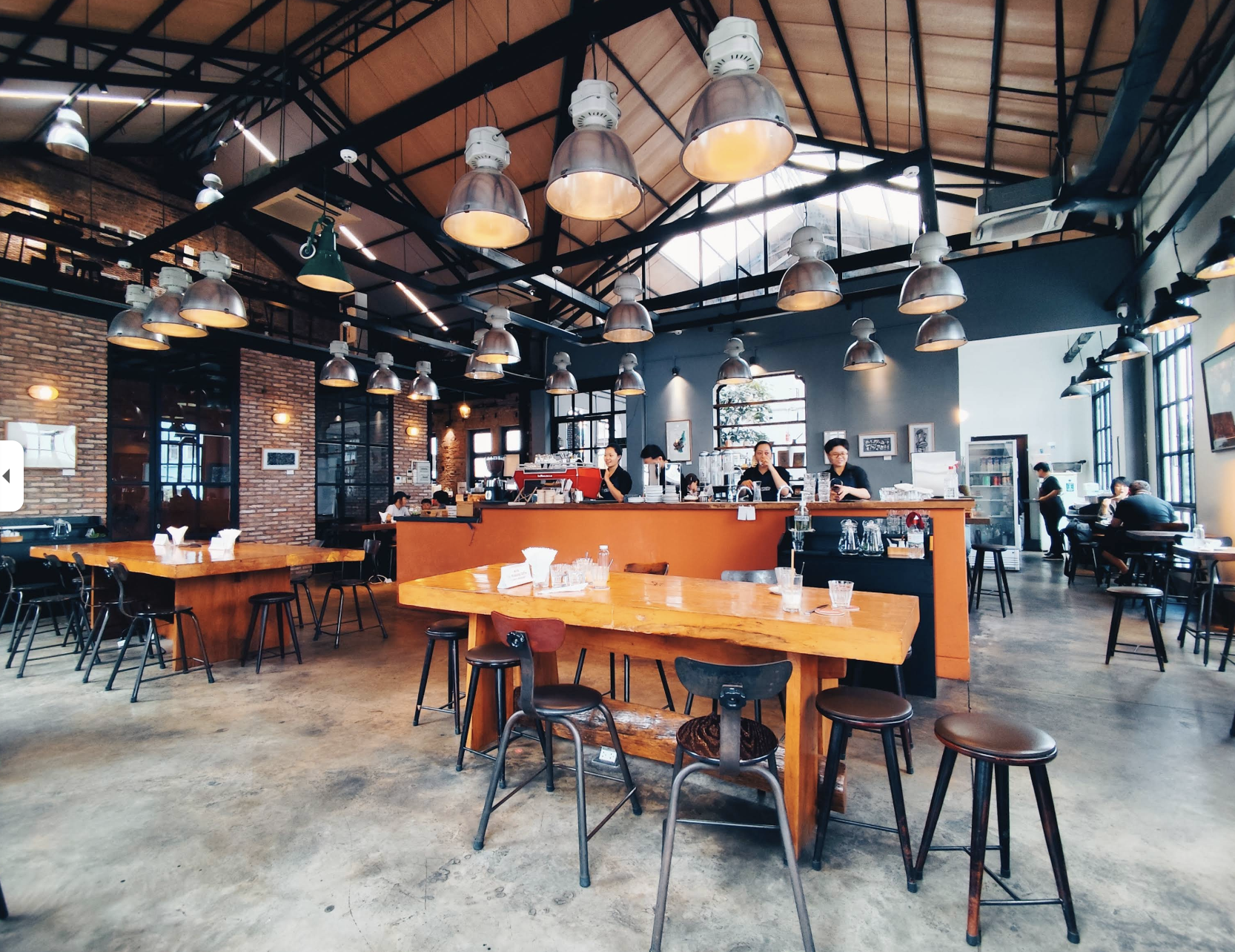
Saigon's coffee scene runs from fifty-cent sidewalk stalls to world-class specialty roasters winning international competitions — to cafés where koi fish swim in glass tanks above your head. The range is the whole point. You can have a life-changing cup in three completely different settings on the same block.

Only in Saigon

"You sit for three hours on a one-dollar coffee and nobody blinks. Most cafés here are your office."
Chapter 04

The range is the thing.

Phở · Omakase · 25,000₫ to 2,500,000₫

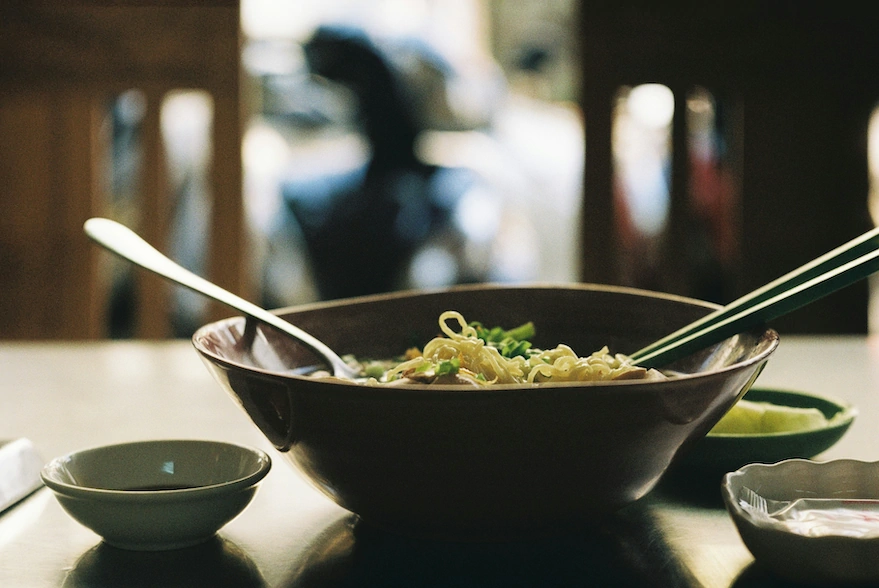
A life-changing bowl of phở for $1.50 at seven in the morning, and a world-class omakase that evening for a fraction of what Tokyo costs. Both on the same day.

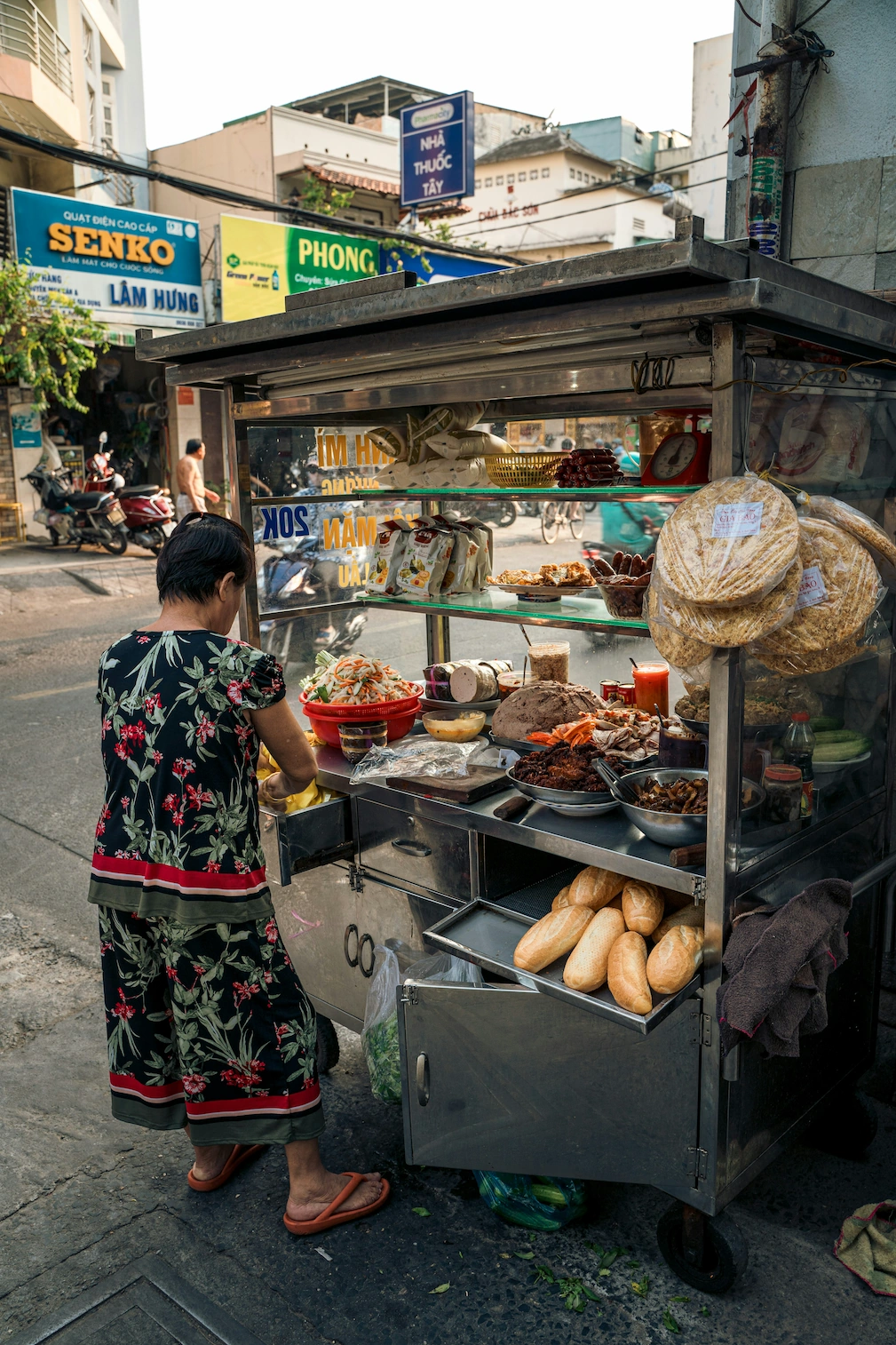
Saigon is one of the best food cities on earth and nobody argues with you about it. Street food, modern Vietnamese, Japanese, Italian, Mexican, French — it's all here, and most of it is shockingly good for what it costs. Every place, from a grilled-shellfish cart to a Michelin-hopeful tasting room, takes QR. You will never need cash for a meal in this city.

07:14 · Plastic stool
$1.50

A bowl of phở bò that will ruin every bowl of phở bò you eat for the rest of your life. No menu. No English. A grandmother at the grill.

Same day
19:30 · Omakase
$85

A twelve-course tasting in a back-room izakaya on Lê Thánh Tôn. Book three days out. Fraction of Tokyo. Worth every đồng.

Streets worth walking

Sit-down Vietnamese

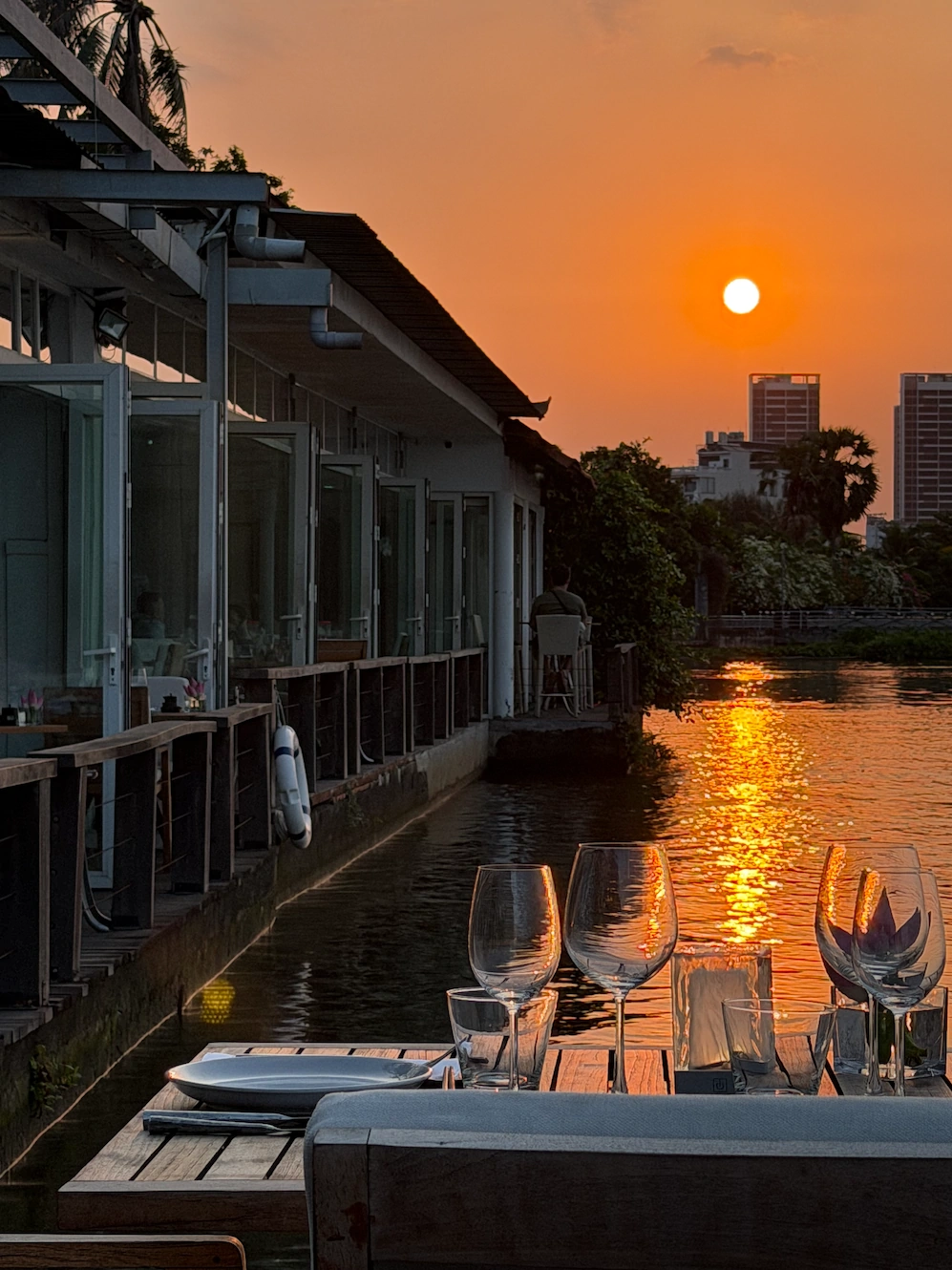
Quán Bụi is modern Vietnamese in beautiful settings, several locations across the city, the default when you want to take someone out for Vietnamese without sitting on a plastic stool.

Cục Gạch Quán is rustic Vietnamese inside an old house; one of the most iconic restaurants in Saigon, and a personal favorite. Nhà Hàng Ngon has every regional Vietnamese dish under one roof — a good first-night stop if you want to try everything before you know what you want.

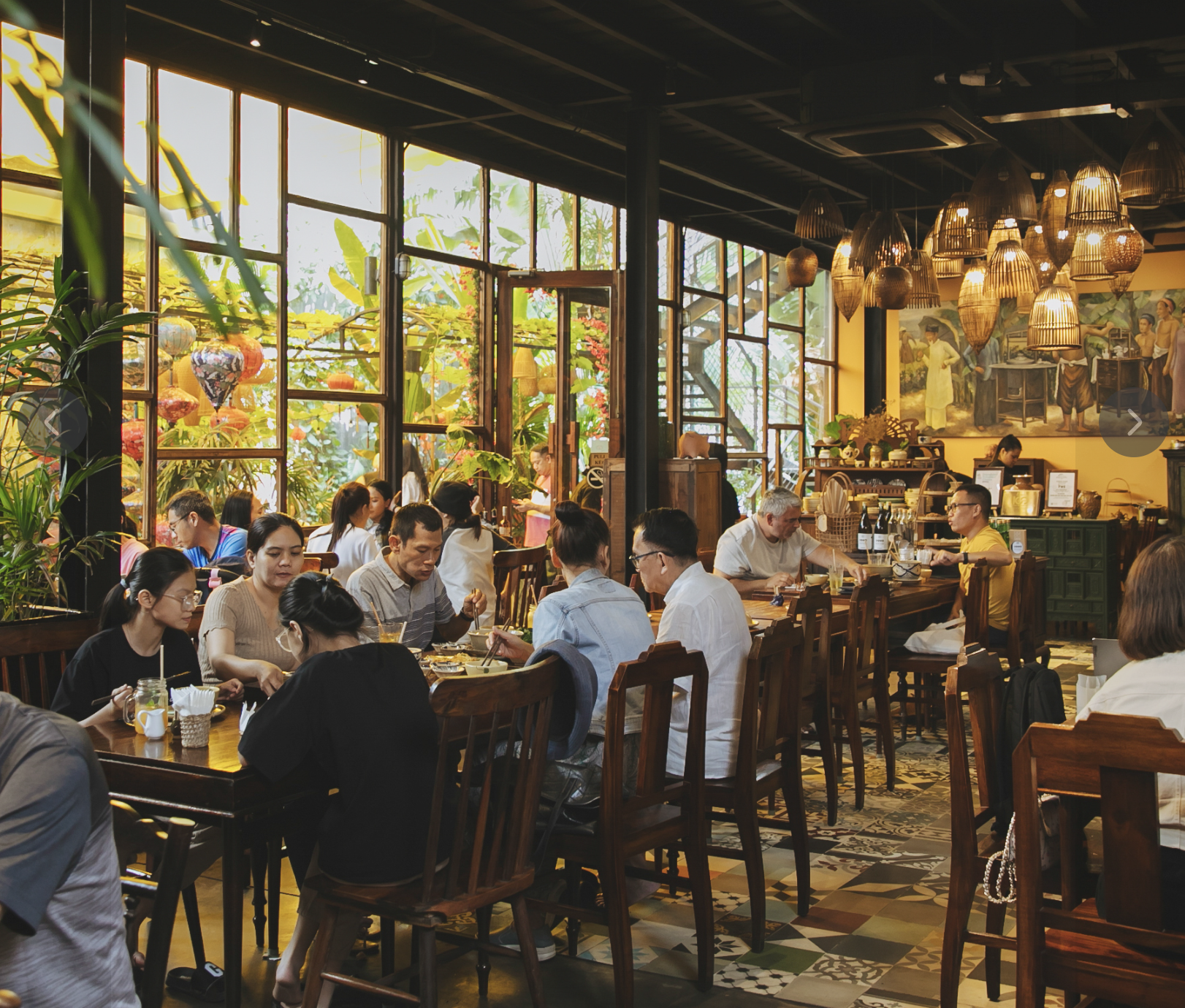
Interior of Quán Bụi with patterned tile floor, wooden chairs, and rattan pendants Fig. 04 · Quán Bụi Tile floor, rattan pendants, the mural out back
Fig. 04Quán Bụi Garden, a weekday lunch. Encaustic tile floor, wooden chairs, rattan pendants, a market-scene mural on the back wall. Modern Vietnamese at a price that feels almost illegal.

The best of the Western stuff

Sear is the best-value steak in Saigon — a fraction of El Gaucho and not even close in the ratio of what you get to what you pay. Don't argue about it. Burger Joint wins burgers; no frills, a proper brioche bun, fries that deserve their own paragraph.

7 Bridges is the pizza spot, with a craft taproom attached. Eddie's is breakfast — pancakes, breakfast burritos, the full American spread, and it's been there forever for a reason. For barbecue, Roast & Smoke in Thảo Điền is the move — twelve-hour brisket, pork-belly sandwiches, a garden to lose an afternoon in.

Brunch, and Japantown

THE BRIX wins brunch: two-hour free-flow from 550,000₫, hotel-pool energy, a DJ, and a burger that shouldn't be that good. Mekong Merchant is the old classic.

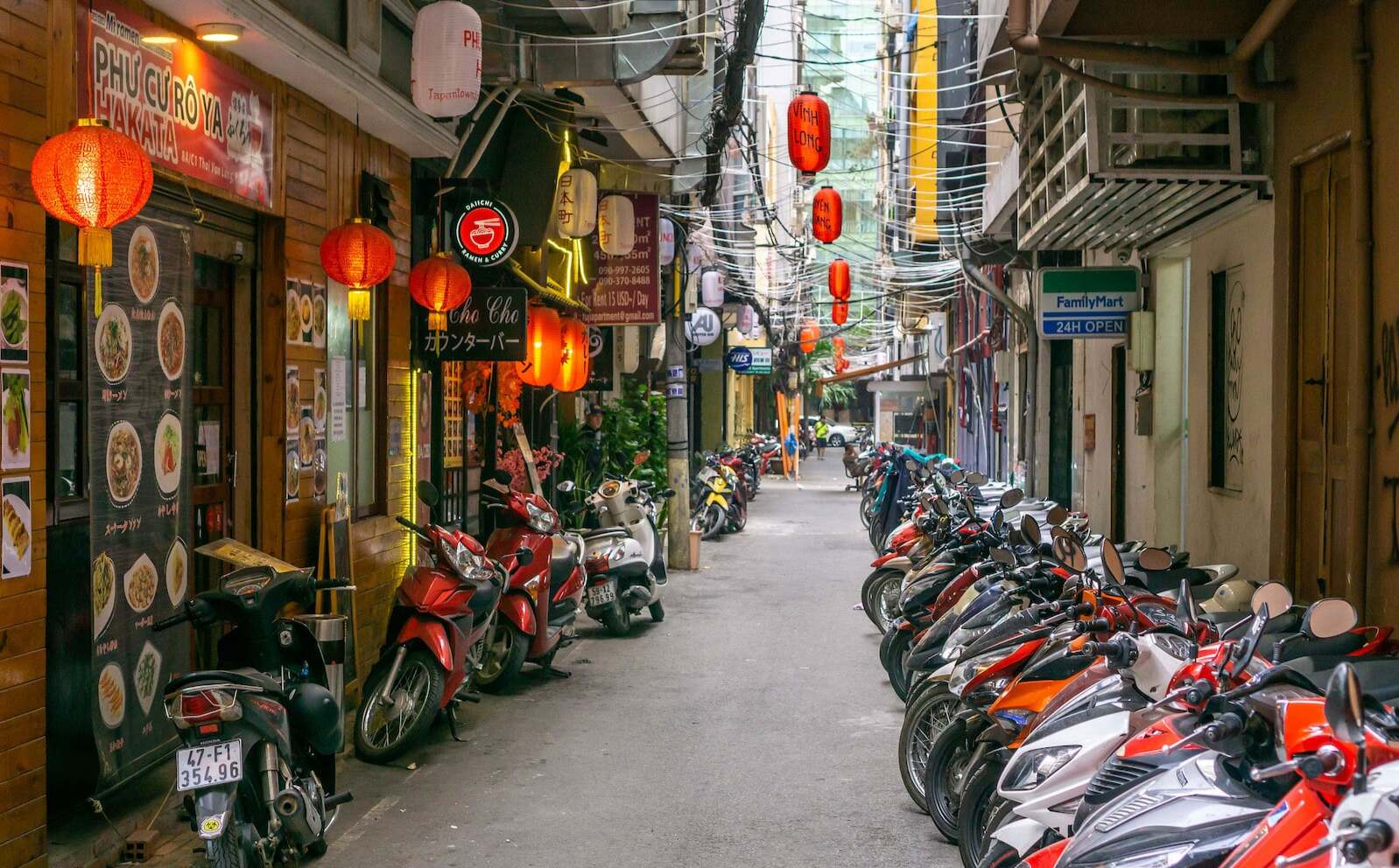
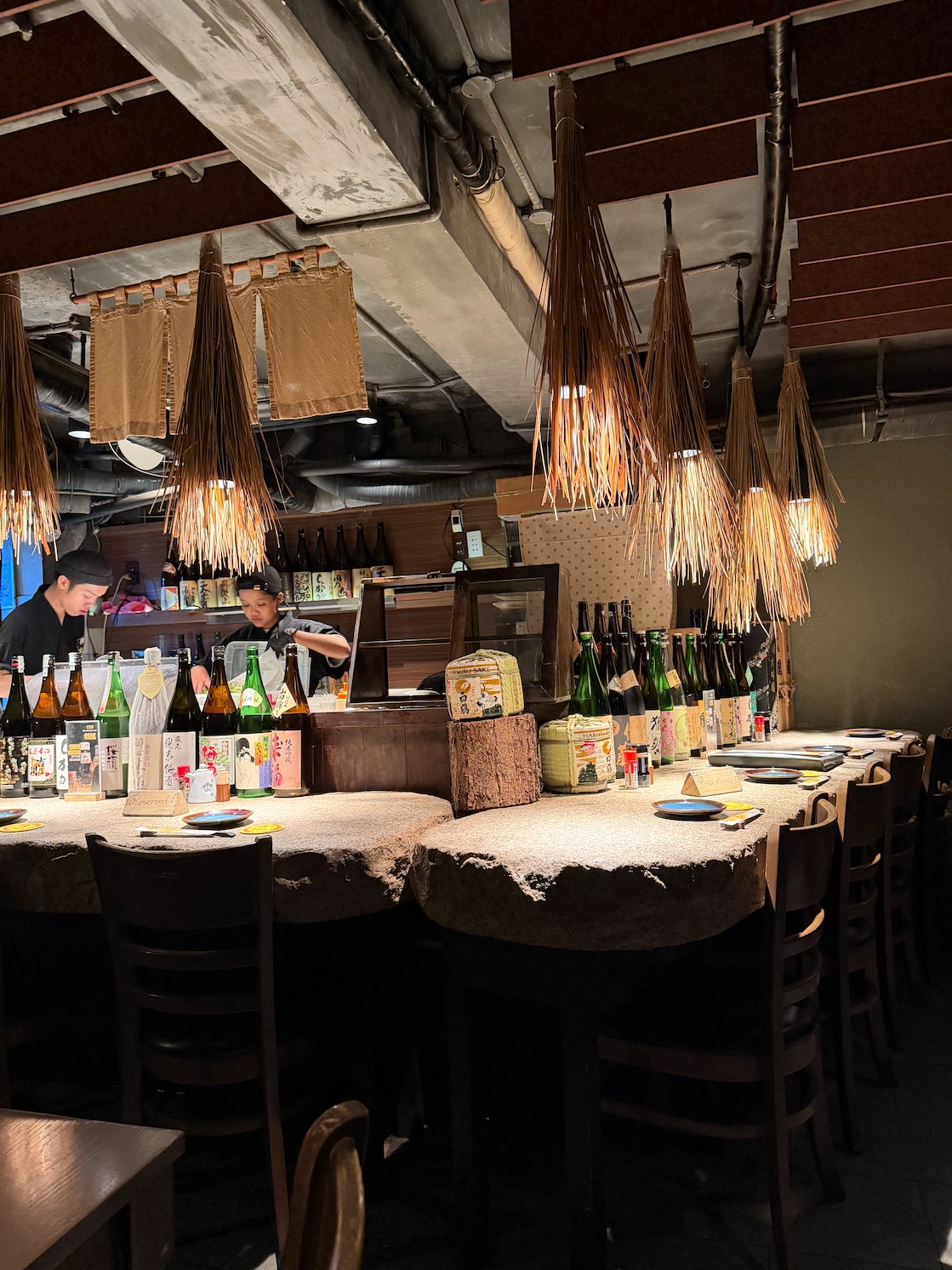
Saigon also has one of the largest Japanese expat communities in Southeast Asia, which is why Lê Thánh Tôn and Thái Văn Lung in District 1 read like three blocks of little Tokyo — izakayas, ramen shops, yakitori bars, and speakeasies stacked on top of each other. Mangetsu is the izakaya to book three days ahead. The smaller, unmarked places are the real secret.
Chapter 05

Most cafés are your office.

Coworking · Wifi · The three-hour coffee

You sit for three hours on a one-dollar coffee and nobody blinks. That's the deal.

If you want a proper desk: The Hive has three locations across Saigon and a "Hive Passport" that lets you drop into their spaces across Asia. Dreamplex is the OG — the one Obama visited in 2016 — with a rooftop terrace looking out over the D1 skyline and a serious community. The Sentry is boutique and stylish, 24/7, and their Thảo Điền location (Sentry P) is pet-friendly, which matters when you live here with a dog.

But the real answer is that most coffee shops here are your office. There's no etiquette around lingering. Order a drink, plug in, get four hours of work done, order a second drink when you're hungry, leave when you're done. Nobody cares. In twelve months you will know the wifi password of eight different cafés by heart.

Between 10 p.m. and 3 a.m.

A short sequence from one Friday night.

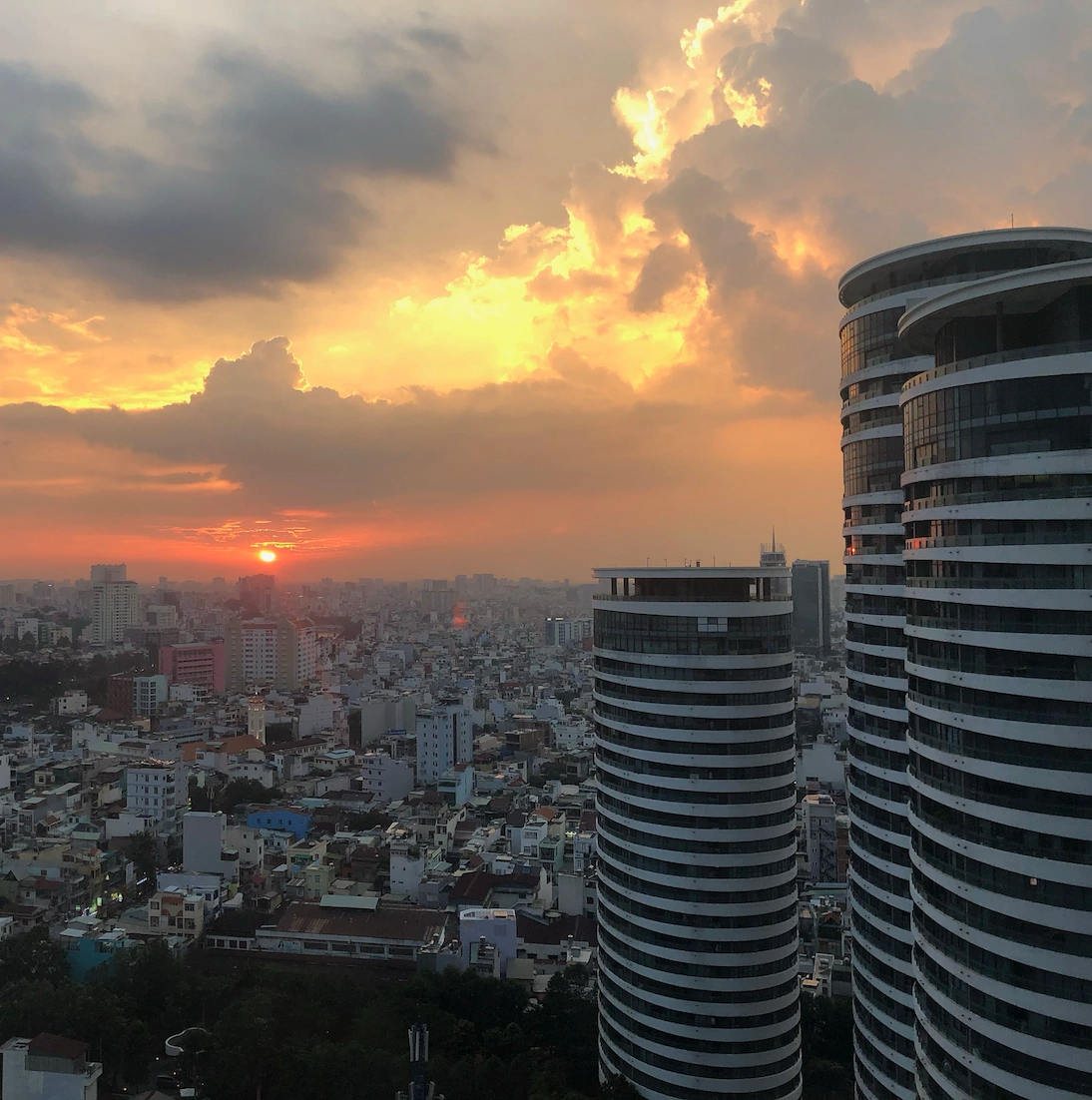
Saigon changes character after dark. The motorbike river thins, neon from signs in Vietnamese, Japanese, and English spills onto the pavement, and the city runs on a different clock. You rarely plan a night here — you just start somewhere, and the night happens to you.

22:14
Pull up on Lê Thánh Tôn. Yakitori smoke out the door. The night hasn’t decided what it is yet.
23:41
Izakaya counter. Shouting in three languages. A second round shows up uninvited.
00:58
Lưu. No plan, just there. The crowd has turned over twice since you walked in.
02:12
A nightcap at Drinking & Healing. The bartender clocks you and nods once.
03:30
Bánh mì on the curb. Grab bike home. The first motorbikes of tomorrow are already moving.
22:00 · Open
Layla

Glass of wine, small plates. Nowhere to be. You don't know yet what kind of night it is.

23:30 · Izakaya
Mangetsu

Tucked behind an unmarked door. Smoke, shouting, yakitori. The kind of place you find once and never forget the route to.

01:00 · Midnight
Lưu Bar

Where you end up at midnight. The crowd changes three times before you look up.

02:30 · Last round
Drinking & Healing

Hidden door, dim light, quiet jazz. The kind of cocktail that makes you slow down and finally order water. (Temporarily closed as of April 2026 — watching for reopen.)

Chapter 06

After midnight.

Izakayas · Cocktails · Luu at one a.m.

The second the sun drops, the city pulls out the plastic stools and the lights come on. Every alley is a bar.

Chapter 07

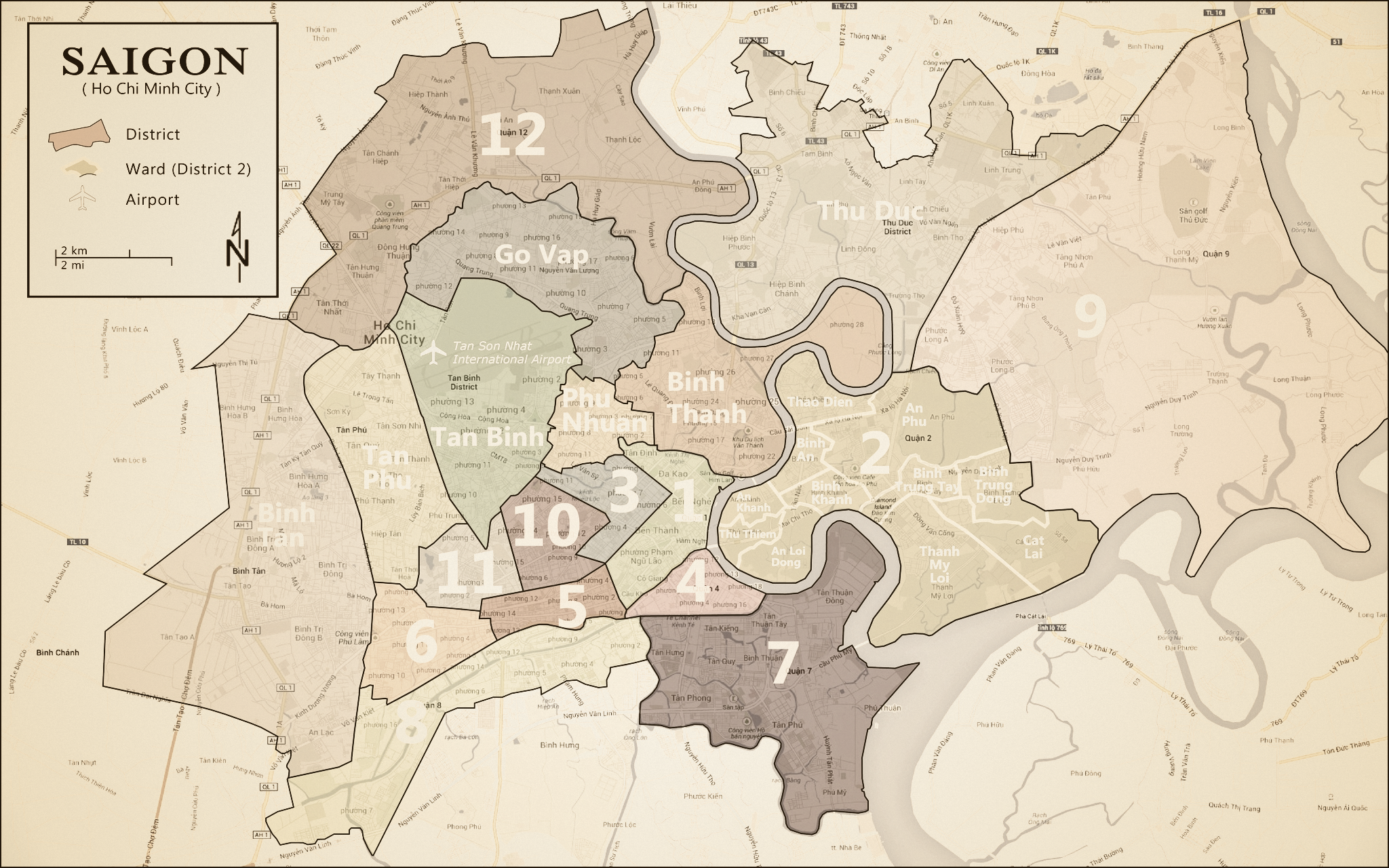
An index of neighborhoods.

An interactive map of where I actually go

Saigon's twenty-four districts blur into each other, but six of them do most of the work of shaping what life here actually feels like.

Antique-styled map of Ho Chi Minh City showing numbered districts and the Saigon River

The six that matter

01District 1Core
02District 3Cafés
03Bình ThạnhLocal
04Thảo Điền (District 2)Expat
05District 4Food
06Chợ LớnOld
01 · Core
District 1

The colonial grid. Opera House, Nguyễn Huệ pedestrian street, and the 42 Nguyễn Huệ apartment block. Where every first-time visitor stays, and where you'll spend most of your work-from-café hours.

Chapter 08

The stuff nobody tells you.

Rent · Bills · Zalo · The currency

The administrative surface of life in Saigon — the small things that trip up every newcomer for exactly the first month, and then never again.

Paying rent, bills, everything

Rent is monthly, by bank transfer to the landlord. Ask for their QR code and pay that way. Apartments come through Facebook groups — expect to be asked for two months' deposit up front; insist on one and usually get it.

Internet is Viettel or FPT, one day to set up, faster than most of Europe, costs almost nothing. Electricity and water are either billed separately by the landlord or rolled into rent; always ask before you sign.

Groceries, shopping, shoes

Annam Gourmet carries imported Western groceries and charges for the privilege. For everything else: GrabMart or Shopee, delivered in twenty minutes. Shopee is Vietnam's Amazon — chaotic interface, same-day delivery, you can buy genuinely anything on it.

Saigon Centre and the Vincom malls cover mid-range shopping. Bến Thành Market has the souvenirs (but you already knew that). Phong Vũ is where you go for electronics.

The things nobody told me

Zalo is everything. Not WhatsApp. Not email. Zalo. Your landlord, your building manager, your gym, your hairdresser — all on Zalo. Install it before you land.

Grab drivers will call you. Every single time. Keep Google Translate open or share your live location in the chat. If you can say "Tôi đang đây" and drop a pin, that's enough.

Healthcare is cheap and excellent. Vinmec is affordable and accepts out-of-pocket payment by QR. You will not miss your country's healthcare system.

The currency takes a minute. Dong has a lot of zeros. Check your bills — especially at night, especially in taxis, especially when the change comes back from a tired hand.

"Everywhere takes QR — from street vendors to fancy restaurants. You never need cash for a meal in Saigon."

One more thing

Every place in this guide takes QR. I never carry cash. The catch: VietQR, the payment rail the whole country runs on, requires a Vietnamese bank account — and that's hard to get as a tourist.

That's the whole guide. Land, skip the line, book your own Grab, find a café you like, stay a while. The city takes care of the rest.

That's Saigon. Come stay a while.

Words

Jon Myers — designer, family of five, two French Bulldogs, Ho Chi Minh City. Writes about Vietnam, crypto, and product design.

Typography

Display set in Fraunces (proxy for GT Sectra). Body set in Inter. Captions and codes in JetBrains Mono.

With thanks to

Every grandmother at a plastic-stool stall, every Grab driver who called twice, and Dalaland's koi.